


Why is it Important to Focus on Women and Climate Impacts?
The evidence is clear that climate change disproportionally impacts women and girls. From changing weather patterns to heightened disasters, climate change exacerbates existing inequalities women and girls face, including lack of economic equality, reduced access to services, and threats of gender-based violence (GBV). Ensuring women’s equality is critical to addressing the global climate crisis. Yet, neither the private sector nor governments can tackle climate change alone. Partnerships across the private and public sectors cultivate leadership opportunities for both women and men in critical sectors.
Investing in Women to Strengthen Supply Chains, is a partnership between the US government and PepsiCo that came out of a successful pilot in the West Bengal region of India. There, partners worked to ensure that women working on family operated farms had equal access to regenerative agriculture trainings to boost the families’ production and farming income. Under Resonance’s implementation, this partnership is now operating in more regions of India as well as in Pakistan, Peru, and Vietnam. The project focuses on four pillars:
- Building Gender Smart Farm partnerships where on-farm trainings and demonstrations are available for the community;
- Strengthening women farmer’s competitiveness;
- Scaling women’s economic empowerment practices within PepsiCo’s business units; and
- Influencing the food and beverage industry by making the business case to invest in women suppliers.
In her remarks at the summit, Subrataa noted that she has seen how the work to increase women’s active participation in PepsiCo’s potato supply chain has empowered women and encouraged them to see themselves as equal partners in their family’s farming enterprise. Through training and development of their personal agency, these women are becoming players in the formal economy. In fact, Ninety-four percent report they are now recognized as contributors to their household’s income.
As Subrataa noted, “we see it is important to change the norms at the household, community, and business levels to bring women in the formal economy” through training men and women on WEE as business well as PepsiCo staff on why it is important to invest in women in their supply chain. Part of that practice of influencing PepsiCo staff is translating the impacts of working towards WEE to the business’ key performance expectations.
Advancing the Business Case for Women’s Inclusion
Through this alliance and project, Resonance is making the evidence-based business case, promoting best practices for empowering women in the agriculture supply chain, and supporting their work to improve farms through climate resilient practices. This is increasing the number of PepsiCo’s suppliers meeting their regenerative agriculture standards, increasing production and quality of potato supply, and improving farmer loyalty to PepsiCo. Drawing on the project’s Monitoring, Evaluation, and Learning (MEL) evidence-based assessments, Subrataa noted that 74% of the women we have worked with have recommended [their families and] other farmers join PepsiCo’s supply chain. “This element of brand loyalty within a community is important to buyers like PepsiCo,” she stated. “In fact, 69% of PepsiCo’s local staff said that greater farmer loyalty is one of the most positive impacts of the partnership’s work.”
Investing in WEE is an emerging component of many corporate sustainability, climate, and ESG roadmaps, not only because doing so can contribute to increased livelihood potentials for women farmers, their families, and sourcing communities, but also because women will play a critical role in climate adaptation and resiliency.
Thank you to the governments, private sector, and Resonance partners (including PepsiCo, Unilever, and the International Union for the Conservation of Nature) for pledging to support Women in Sustainable Economies (WISE) and making significant contributions towards these vital efforts. Resonance is excited to continue its work as a nexus of climate solutions and gender equality. As former Vice President Harris noted, when we “lift the economic status of women…all benefit.”
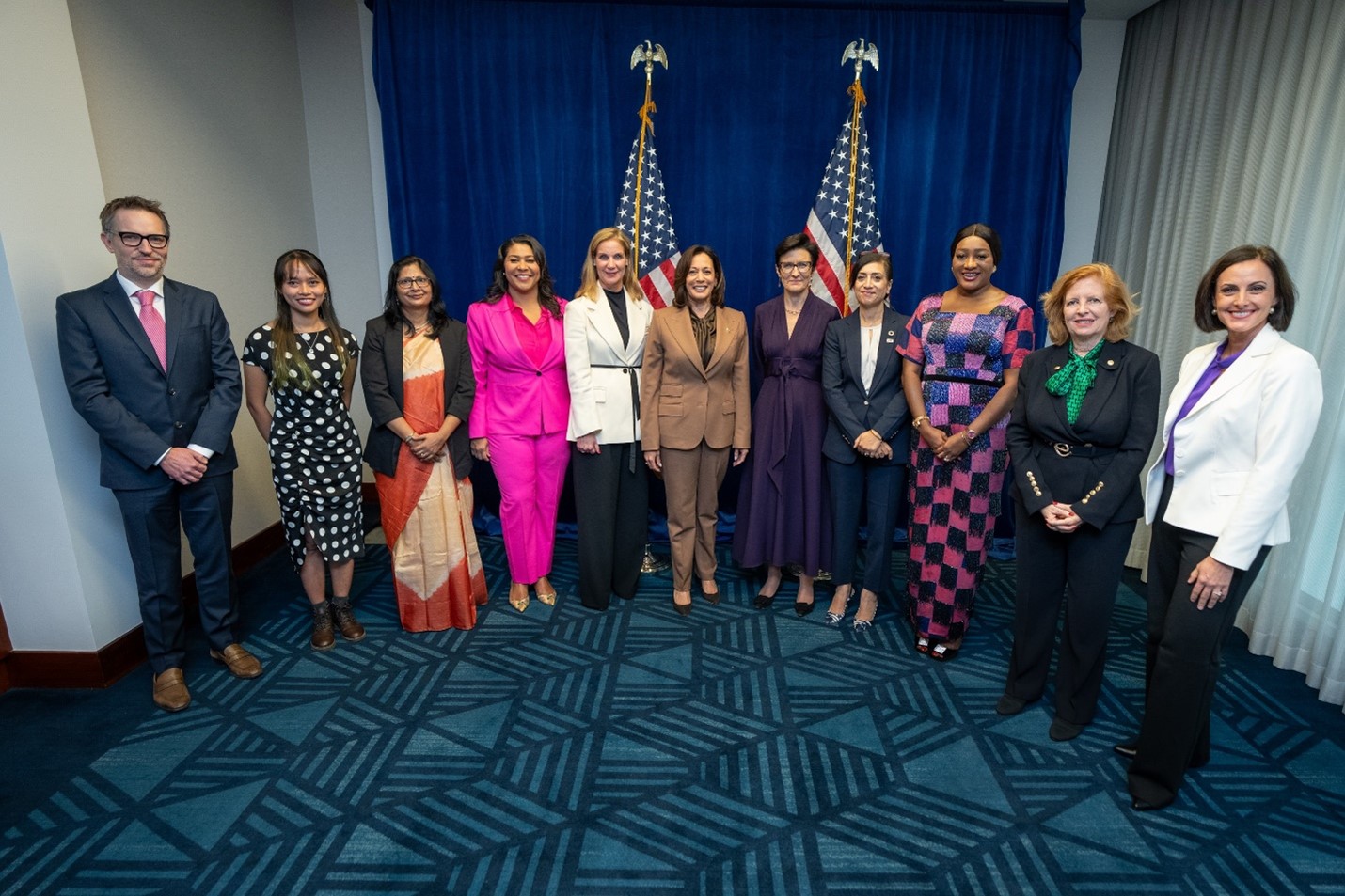 Vice President Harris with WISE launch panelist and speakers.
From Left: Ryan Roslansky, CEO LinkedIn; Trang Nguyen, Founder and CEO Wild Act Vietnam; Subrataa Chakroborty, Senior Advisor for Inclusive Sourcing at Resonance; San Fransico Mayor London Breed; Kelly Mahon Tullier Vice Chair, Chief People and Corporate Affairs Officer of Visa; Vice President Harris; Jane Fraser, CEO Citi Bank; Sukhvir Basran, Board Chair of 2X Global; Dr. Tinuade Sanda, CEO of Nigeria’s Eko Electricity Distribution Company; Merit Janow, Chair of the Board Mastarcard, Angela Naef, Chief R&D Officer of Reckitt.
*Originally published December 2023. Updated for current best practices in 2026.*
