


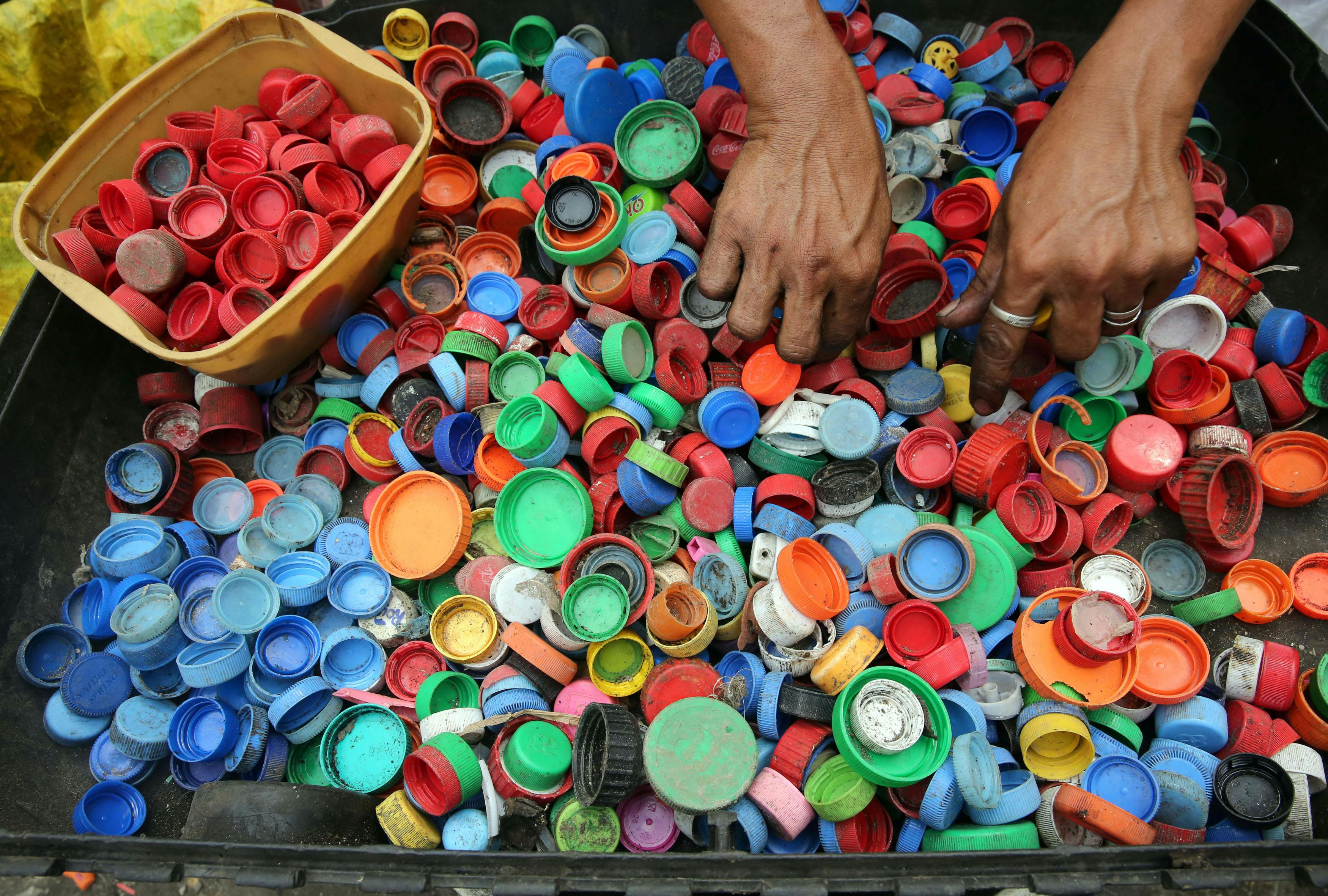
The Plastics Problem
The OECD projects global plastic production will surge to 70% by 2040, reaching 736 million tons. Alarmingly, only 6% will likely be recycled under current trends. Even with better waste management, plastic pollution in rivers and oceans could rise 50% by 2040, leaving 300 million tons of waste—potentially outweighing fish in the oceans by 2050.
A Circular Solution
Transitioning to a circular economy—where plastics are reused and recycled—could significantly reduce waste. The Ellen MacArthur Foundation estimates that by 2040, this shift could cut ocean plastic leakage by 80%, lower greenhouse gas emissions by 25%, create 700,000 jobs, and save $200 billion annually.
To drive this change, Unilever, USAID, EY founded the CIRCLE Alliance to invest $25 million to tackle plastic waste, empower women, and support circular economies in India, Indonesia, the Philippines, and Vietnam. Sadly, the CIRCLE Alliance was one of many casualties of the change in US foreign policy and dismantling of USAID. Yet the learnings from CIRCLE Alliance remain salient as the world continues to battle a plastics crisis.
The Need to Engage Women
Women play important roles in the demand for plastic, if and how it enters into countries’ recycling streams, and can be key for creating innovative and resilient systems for circular plastic waste management. We must intentionally engage women to improve plastic circularity and solve the global waste challenge for three key reasons.
- Women lead household level consumption and recycling decisions, including regarding what plastic products are purchased and how waste is discarded in the home.[1] This is especially true in countries with the highest rates of plastic waste entering the ocean.[2] Women are therefore key to target for promoting environmentally responsible consumerism and recycling behaviors.
“Women are more likely to recycle, minimize waste, buy organic food and eco-labeled products, and save water and energy in the household. By leading behavior change and consumer attitudes, women can drive change across sectors.”[3]
Additionally, at the household level across all target countries, women are primarily responsible for managing household waste and ensuring that recyclable plastics are separated from non-recyclables. In the Ocean Conservancy’s study ‘The Role of Gender in Waste Management: Gender Perspectives on Waste in India, Indonesia, the Philippines and Vietnam’ (2019), they found that women bear sole responsibility for recyclables disposal 20-95% of the time, whereas men do 0-12% of the time.
Women need to be a target demographic when designing new goods, services and behavior change campaigns related to waste reduction and management. Enterprises can invest in gender-responsive design that aligns with women’s needs, interests and priorities.
- Women play a key role in recyclable plastic collection. In India, Indonesia, the Philippines, and Vietnam the government-run formal solid waste management systems primarily direct waste, including plastic waste, to landfills or energy treatment plants. Most recycling therefore occurs through the informal economy, and women comprise the majority of the estimated 20 million informal waste collectors. This means that women are critical to getting plastic into the recycling stream.
They do this work in difficult and dangerous conditions with little or no labor or social protections. Some spend up to 12 hours a day collecting, covering over 20 miles on foot to make as little as USD $8 a month, all while facing health and gender-based violence risks.
Women informal waste collectors need to be supported by public and private sector actors so that they can perform this valuable work safely and effectively. Approaches must empower women as leaders in local emerging circular economies, including through micro-entrepreneurship support.
- Women waste entrepreneurs are critical to addressing the plastic waste crisis as part of a transition to socially just circular economies. Women waste entrepreneurs are essential to socially just circular economies. Delila Khaled’s white paper, Women-Waste-Climate Nexus, highlights that women entrepreneurs are often motivated to address social needs, deliver stronger environmental and financial results, and generate higher revenue per dollar invested than their male counterparts. However, funding gaps persist. Only 0.2% of climate-related development aid and less than 3% of global VC funding in emerging markets go to women-led businesses.
Increasing investment in women entrepreneurs is critical for innovative, effective solutions to the plastic waste crisis. The world must find new ways to empower women as waste collectors, workers, and entrepreneurs—unleashing their potential to drive transformative solutions to the plastic waste crisis.
If you are interested in restarting a circular initiative similar to the CIRCLE Alliance, reach out and let's chat.
[1] Boorstin, J. (2022). When Women Lead: What They Achieve, Why They Succeed, and How We Can Learn from Them. Avid Reader Press/Simon & Shuster.
[2] Jenna R. Jambeck et al. Plastic waste inputs from land into the ocean. Science. 347,768-771(2015). DOI:10.1126/science.1260352
[3] United Nations. ‘Why Women are key to climate action.’
